Lapsing
 cell phones are now widely distributed. However, dozens of millions of wired telephones and radiotelephones are still in operation, and many people prefer their cell phones.
Inter-urban and international connections to a fixed household telephone unit are much cheaper, need not constantly monitor the state of battery charging and periodically change them.
Connecting one or more parallel stationary telephones and radiotelephones to the communications line with your hands. A simple task, by virtue of practically any person who doesn't know the depths of a connection.
What telephone voltage
The telephone line is under constant current 40-60 B if the phone is not connected or connected, but the telephone tube is placed on the telephone. During the call, the communication voltage becomes an amplitude variable to 120 V. When you take off the phone, the voltage decreases to 6-12 V.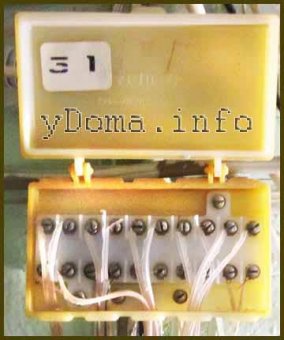 It's not dangerous for life, but it can cause unpleasant feelings. It's impossible to deactivate the communication line or destroy the telephone system when it's connected. A telephone line may be deactivated for a few minutes if a pipe is long removed without a number set or if short communication lines are shut down. The telephone line automatically deactivates the automatic telephone station (ATS) to save electricity.
 So you can boldly get your own phone on the line.
It is desirable, but not necessarily, to verify the availability of a communication line before a fixed telephone or radiotelephone is connected. The line voltage may be measured by a voltmeter calculated to measure the constant voltage. If the phone to the line is not connected or connected, and the pipe is on the phone, the device shall show a voltage of 40-60 V. If you don't have a voltmeter, you can test it with potatoes, and it's not a joke, it's a real way of checking. It's enough in the cut of the potatoes to plug off the isolation of the loop wire.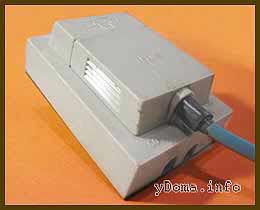 There's no need for a battery, because the wire is already under pressure.
Arrangement of connection of the fixed telephone to the ATS
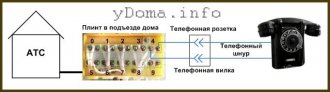
An automatic telephone station (ATS) will extend a 100-way telephone cable to each house, which is distributed by 10-part cables at the entrance of the house. The ends of ten-park cables are sprayed in ten-park blints at the entrances of the house. The plates shall be placed in the boxes or placed on the walls. In the picture, a blade with a roof.